
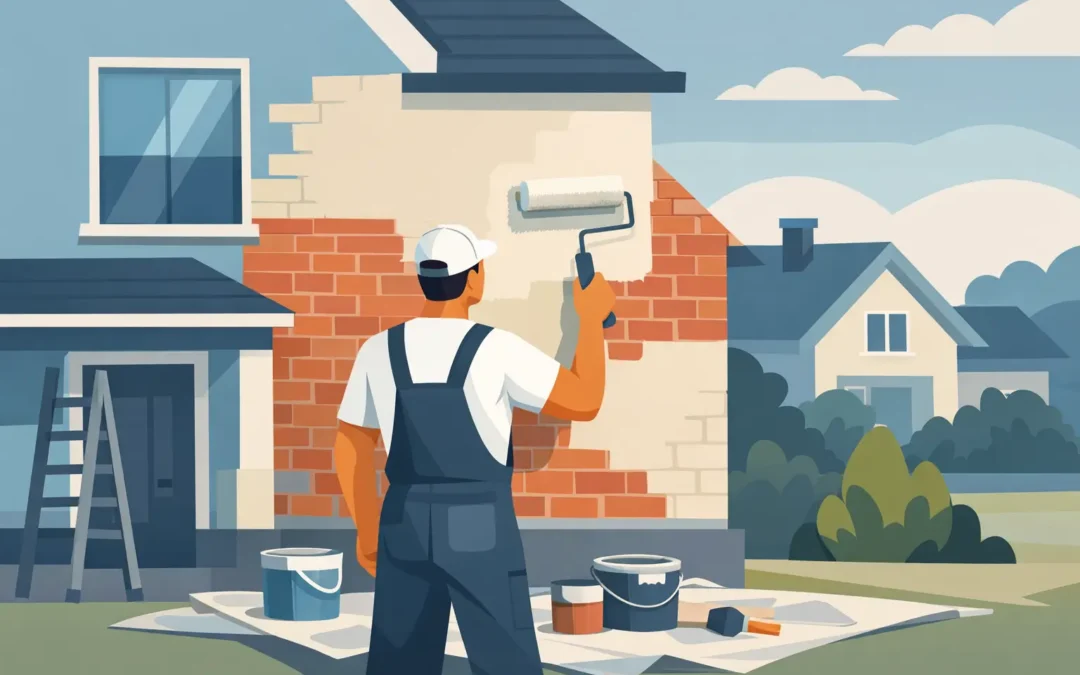
Fresh masonry paint can transform a tired pebble-dashed wall, an ageing rendered extension or a weather-stained garden building. But knowing how to paint exterior masonry properly is less about getting paint on the wall and more about creating a sound, dry surface that will hold its finish through north-west rain, frost and changing temperatures.
A good result should look even from the pavement as well as close up. More importantly, it should protect the surface without trapping moisture behind it. Rushing preparation, choosing an unsuitable coating or painting in poor weather can lead to peeling, patchiness and damp problems that cost more to put right later.
Check what you are painting first
Exterior masonry covers more than brickwork. Your property may have sand and cement render, painted render, monocouche render, blockwork, concrete, pebble dash or bare brick. Each surface behaves differently, and that affects the preparation and paint system required.
Start by checking the wall carefully. Look for cracks, hollow or loose render, flaking paint, green algae, salts appearing as a white powder, and staining around gutters, window sills or ground level. Paint will not repair these issues. It can improve the appearance of a sound wall, but it cannot stabilise failed render or stop water entering through a crack.
If render sounds hollow when lightly tapped, is breaking away, or has repeated cracking, repair work should come before decorating. The same applies where rainwater goods are leaking. Fixing the cause of moisture first gives any new finish a fair chance of lasting.
It is also worth considering whether paint is the right answer. A coloured render finish may be a better long-term choice for a heavily weathered façade or a property requiring wider repairs. This is particularly relevant where several layers of old paint are already failing.
Choose the right masonry paint
Use a quality exterior masonry paint designed for the surface you have. It needs to cope with rain, ultraviolet light, dirt and normal movement in the wall. For most painted render, concrete and masonry, a breathable exterior masonry coating is the sensible choice because it allows moisture vapour within the wall to escape while shedding rain from the outside.
Avoid using ordinary interior emulsion outdoors. It is not made for prolonged wet weather or temperature changes and is unlikely to last.
Check whether the existing coating is smooth, textured, glossy or chalky. A previously painted wall usually needs a compatible masonry paint, while bare or very porous surfaces may need a suitable stabilising solution or primer first. Follow the paint manufacturer’s system guidance rather than assuming every primer works with every finish.
Colour deserves practical thought as well. Very dark shades can show fading and may absorb more heat, which increases stress on a rendered surface exposed to strong sun. Pale and mid-tone colours are often more forgiving on larger elevations. Buy enough paint from the same batch to complete the job, especially where colour matching matters.
Prepare exterior masonry thoroughly
Preparation is where lasting paintwork begins. Remove loose, flaking material with a scraper or stiff brush, paying particular attention to cracks, edges, window reveals and areas beneath sills. Sound old paint does not always need to come off, but anything loose must be removed back to a firm edge.
Wash away dirt, soot and algae. A masonry cleaner or fungicidal wash can be useful on green growth, provided it is used as directed and thoroughly rinsed where required. Pressure washing can speed up cleaning, but it needs care. Too much pressure can damage weak render, force water into cracks and leave the wall wetter than it appears.
Allow plenty of drying time after cleaning. A wall can feel dry on the surface while moisture remains within the render or brickwork. Painting too soon is a common cause of blistering and poor adhesion.
Repair small, stable cracks with a suitable exterior filler or repair mortar. For wider cracks, recurring movement or damaged render, seek specialist advice rather than simply filling over the problem. Once repairs have cured, rub back rough edges so the finished wall does not show obvious patches.
Mask windows, doors, paving, brick detailing and soil pipes before painting. Cover nearby plants and move outdoor furniture away from the work area. Taking time to protect the surroundings produces a cleaner job and avoids difficult paint splashes on uPVC, glass or paving.
Pick a dry weather window
The best weather for painting masonry is dry, mild and settled. Aim to work when the wall is dry, rain is not expected during the coating’s drying period, and temperatures sit within the paint manufacturer’s stated range. This is often somewhere above 5°C, although products vary.
Do not paint onto a wall in direct blazing sun if you can avoid it. Paint may dry too quickly, making it harder to keep a wet edge and increasing the chance of lap marks. Likewise, avoid cold evenings, mist, high humidity and windy conditions that carry dust onto fresh paint.
In Greater Manchester, Salford, Bolton and Bury, the forecast matters as much as the calendar. A dry-looking morning after overnight rain is not necessarily a suitable painting day, particularly on shaded north-facing walls. Give the masonry time to dry properly.
How to paint exterior masonry evenly
Stir the paint thoroughly, including from the bottom of the tin, and decant only what you can use comfortably. Begin by cutting in around windows, doors, pipework and corners with a masonry brush. Use a medium-pile masonry roller for broad areas, selecting a longer pile for rough render or pebble dash so the coating reaches into the texture.
Work in manageable sections and maintain a wet edge. On a large elevation, it is better to complete from one natural break to another, such as a corner, downpipe or change in material, rather than stopping halfway across an open wall. This helps avoid visible overlaps when the paint dries.
Apply the first coat evenly but do not try to make it overly thick. Heavy application can create runs, slow drying and leave paint sitting across textured surfaces rather than bonding into them. Most masonry finishes need two coats for dependable coverage and colour consistency, although very porous walls or dramatic colour changes can need more.
Let each coat dry fully before applying the next. Drying and recoating times change with temperature, shade and humidity, so treat the instructions on the tin as a guide rather than a guarantee. If rain arrives before the paint has cured, do not simply paint over any affected areas the next day. Check for streaking, blistering or loss of adhesion first.
For high walls, use safe access. A ladder may suit small, low-level touch-ups, but it is not the right working platform for extended painting. Properly erected scaffolding or access equipment makes it easier to apply paint consistently and work safely around upper-storey windows and eaves.
Common mistakes that shorten the life of paintwork
The most frequent problem is painting over a wall that has not been repaired or allowed to dry. Another is applying a new coating over powdery, unstable old paint without properly removing or stabilising it. Both can make a property look improved briefly, then leave it peeling within a season or two.
Using a cheap or unsuitable paint is another false economy. Exterior walls are exposed to far more than everyday dirt. They deal with driving rain, frost, traffic grime, sunlight and movement in the substrate. A paint system chosen for those conditions is worth the extra care.
Finally, do not overlook details. Unsealed cracks around sills, leaking gutters, poorly finished edges and paint bridging onto window frames can undermine an otherwise tidy job. The standard of preparation around these areas usually tells you how well the whole project has been carried out.
When to bring in a specialist
Painting can be a satisfying improvement project when the wall is sound, accessible and only needs renewal. It becomes more involved when there are widespread cracks, failed render, persistent damp, high elevations or uncertainty about previous coatings.
A specialist can identify whether the issue is cosmetic or whether the wall needs repair, replacement render or a breathable finishing system. At DecoRenders, the focus is on dealing with the condition of the exterior first, then achieving a clean finish that improves how the property looks and performs.
Take a careful look at the wall before buying paint. If the surface is dry, stable and properly prepared, a well-applied masonry coating can give your property a smart, weather-ready finish for years rather than months.
Recent Comments