
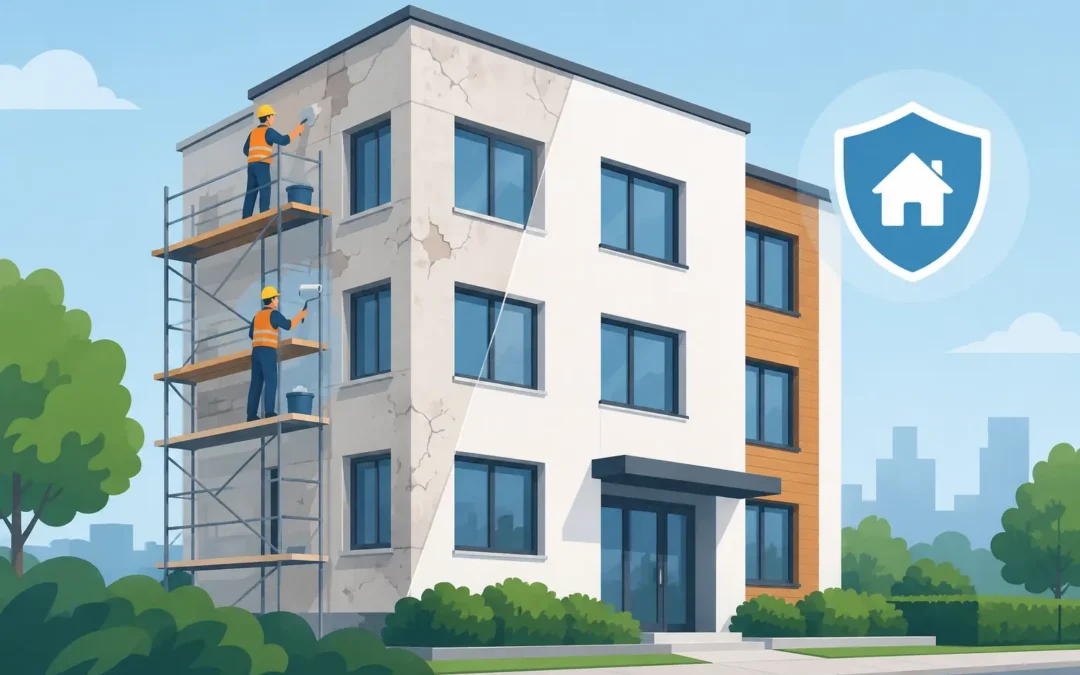
A cracked render finish, faded paint or damp patch on an outside wall is rarely just a cosmetic problem. It can be an early sign that rainwater is getting where it should not, or that the existing surface has reached the end of its working life. Façade refurbishment gives property owners a practical way to repair these issues while giving the building a cleaner, more modern appearance.
For homes, rental properties and small commercial buildings, the right approach can improve weather protection, reduce heat loss and strengthen kerb appeal. The key is not simply covering over a tired wall. It is understanding what has caused the surface to fail, then choosing a finish and repair method that will last.
What façade refurbishment can involve
A façade is the outward-facing wall of a building, usually the front but often the sides and rear elevations too. Refurbishment can range from local repairs to a full renewal of the external finish. The scope depends on the wall construction, its condition and what you want the property to achieve once the work is complete.
On a rendered property, work may include removing loose or hollow render, repairing cracks, treating damaged areas around windows and doors, and applying a new render system. Where the walls are cold and the project allows for it, external wall insulation can be fitted before the new finish. This adds insulation to the outside of the property, then protects it with a purpose-made render system.
Some projects are primarily about appearance. A dated pebble-dash finish, patchy painted render or mismatched extension can be transformed with a modern coloured render. Others are driven by a fault, such as water staining, blown render or cracking caused by movement. Often, it is a mixture of both: a necessary repair that becomes an opportunity to improve the whole exterior.
When does a façade need attention?
External walls put up with years of wind, rain, frost and changing temperatures. In Greater Manchester and the wider North West, persistent wet weather makes sound detailing particularly important. A small weakness around a sill, pipe penetration or roofline can allow water behind a finish and lead to bigger repairs later.
Cracks do not always mean there is a serious structural problem, but they should not be ignored. Fine hairline cracking can result from normal movement or an ageing coating. Wider, repeating or stepped cracks may need more investigation, especially where there are signs of movement in the brickwork beneath. A specialist should assess the cause before recommending a repair.
Look out for render that sounds hollow when tapped, areas that are bulging or flaking, persistent damp marks, green staining, crumbling corners and failed sealant around openings. Fading is less urgent, but it can make an otherwise well-kept property look neglected. If painted render needs regular repainting, a through-coloured finish may be a more practical long-term option.
For landlords and commercial owners, exterior condition also affects how tenants, customers and visitors view the building. A tidy, professionally finished façade sends a different message from one with peeling surfaces and visible repairs.
Start with the cause, not the finish
The most expensive mistake in façade work is applying a new coating over an unstable or damp background. It may look smart for a short time, but the same fault is likely to show through again.
Before refurbishment begins, the walls should be checked for failed render, damaged pointing, defective gutters, leaking downpipes and poor detailing around windows, doors and roof junctions. If water is running down a wall every time it rains, no render finish can compensate for the problem indefinitely. The drainage issue needs sorting first.
The condition of the existing substrate matters too. Solid brick, blockwork, old render, painted surfaces and external wall insulation all need compatible preparation and materials. Some old coatings are difficult for new render to bond to. In these cases, removal, reinforcement or a suitable base coat may be needed rather than relying on a quick overcoat.
This is where clear advice pays off. A good contractor will explain what can be retained, what needs removing and why. The answer is not always a full strip-back, but neither is it always sensible to repair only the most obvious damaged patch.
Choosing the right render finish
There is no single best finish for every property. The wall type, exposure to weather, desired look, budget and level of maintenance all affect the decision.
Monocouche render is a popular choice for a crisp, modern finish. It is coloured through the material, so the colour is not simply a layer of paint on the surface. This can make it a practical choice for homeowners who want a fresh appearance without planning regular repainting. It still needs correct installation, suitable backgrounds and well-finished details to perform properly.
Silicone and acrylic-based render systems can offer a flexible, decorative surface with good water resistance. They are often used as part of an insulation render system and are available in a broad range of colours and textures. Their suitability depends on the full system beneath them, not just the top coat selected from a colour chart.
Traditional sand and cement render remains appropriate in certain situations, particularly where a property needs a more conventional finish. However, it can be less forgiving of movement than some modern systems. On older buildings, breathability and compatibility with the existing wall are especially important. Choosing a hard, impermeable finish for a wall that needs to release moisture can create further problems.
A sample and a proper discussion of texture are worthwhile. Bright white can look sharp but may show dirt more readily on exposed elevations. Softer greys, creams and stone shades often suit North West homes well and can be more forgiving between cleans. The right colour should work with brickwork, roof tiles, window frames and neighbouring properties, rather than competing with them.
Façade refurbishment and external wall insulation
If a home has solid external walls and feels cold despite adequate loft insulation and heating, external wall insulation may be worth considering as part of the refurbishment. Insulation boards are fixed to the outer walls, reinforced and finished with a render system. This can improve comfort inside while renewing the whole exterior at the same time.
It is a bigger investment than re-rendering alone, and it changes details around windows, doors, eaves, drains and service pipes. Those details are not minor extras. Poorly handled junctions can spoil the appearance and create weak points for water. Window reveals, sills and the base of the wall need to be planned carefully from the outset.
External insulation also makes most sense when the existing render is already failing or when a substantial exterior upgrade is planned. If the current finish is sound and heat loss is not a concern, a straightforward repair and new decorative finish may be the better-value route. Every property needs its own assessment.
Good preparation is what makes the finish last
The visible top coat gets the attention, but much of the workmanship sits underneath it. Safe access, clean and stable backgrounds, correct beads, reinforcement around openings and carefully formed edges all make a real difference to the completed job.
Windows and doors should be protected properly, and areas around the property kept as tidy as the work allows. Rendering is naturally a hands-on, wet trade, but a professional team will organise the site, control waste and avoid leaving a mess for the customer to deal with. It is also sensible to discuss access, parking, pets, working hours and any neighbouring concerns before work starts.
Weather affects rendering too. Heavy rain, freezing conditions and very hot, direct sun can all influence application and curing. A reliable programme should allow for the conditions rather than rushing work to meet an unrealistic date. That can be frustrating when you want the job completed, but it protects the quality of the finish.
Repairs or a full refurbishment?
Local repairs are often sensible where damage is confined to a small area and the surrounding finish is sound. For example, impact damage near a driveway, a failed patch around a removed cable, or a small area affected by a leaking gutter can sometimes be repaired without treating the entire elevation.
The challenge is matching an older texture and colour. Even a carefully completed repair can remain visible on faded or weathered render. Where there are numerous patches, widespread cracking or several different finishes on the same property, full refurbishment usually gives a more consistent and durable result.
For extensions and altered buildings, renewing all connected elevations can also help the property look intentional rather than pieced together. This is particularly effective when old brickwork, dated render and newer blockwork have been brought together over time.
Questions worth asking before work begins
A clear quotation should explain the preparation work, the proposed render system, the areas included and how details such as window edges, pipes and access will be handled. Ask whether loose material will be removed, how cracks will be treated and whether the price includes protection, waste removal and a final clean-down.
It is also reasonable to ask about previous projects of a similar type. Experienced specialists can talk through the practical differences between a cosmetic refresh, a remedial repair and an insulated render system without pushing every job towards the most expensive option.
For property owners in Manchester, Salford, Bolton and Bury, local experience matters because exterior walls here face regular rain and changing conditions. DecoRenders approaches each project with the same priority: identify the issue properly, prepare the background carefully and deliver a finish that looks right for the building.
A well-planned refurbishment should leave you with more than a smarter-looking wall. It should give you confidence that the exterior is properly protected, the details have been considered and the work will continue to earn its place long after the scaffolding has gone.
Recent Comments