
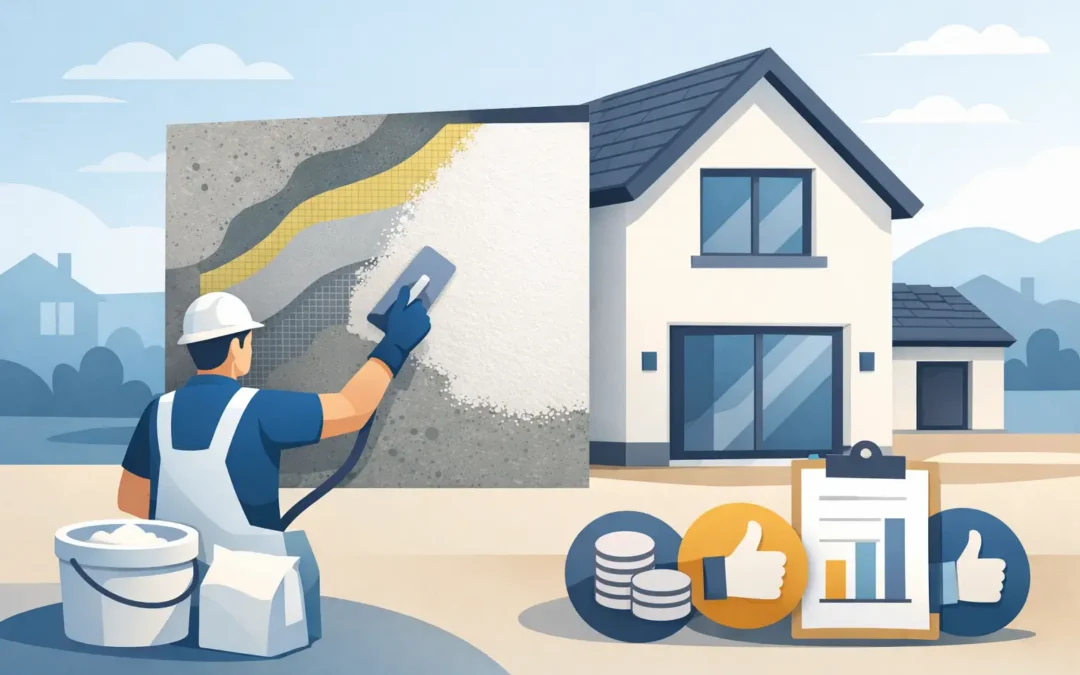
A fresh render finish can make a tired house, extension or garden wall look properly cared for again. But a monocouche render review UK homeowners can rely on needs to look beyond the colour chart. The material can produce an excellent, low-maintenance exterior, but its performance depends heavily on the wall beneath it, the chosen system and the standard of application.
Monocouche is often described as a coloured render that only needs one coat. That is broadly true, although a sound job is rarely as simple as putting one layer straight onto a wall. Proper preparation, beads, reinforcement where required and careful curing all make the difference between a smart façade and one that disappoints after the first hard winter.
What monocouche render is designed to do
Monocouche is a through-coloured cement-based render. Rather than applying a standard sand and cement render then painting over it, the colour is mixed into the render itself. Once applied, it is normally finished with a scraped or textured surface, giving a consistent appearance across the elevation.
The main appeal is practical. There is no paint film to peel or regularly repaint, and a well-chosen colour can give a property a clean, modern finish for many years. It is particularly popular on extensions, new-build homes, refurbished commercial units and properties where old painted render has become patchy.
It is not a magic cover-up for poor masonry, however. Monocouche is a finish, not a substitute for structural repairs. Loose brickwork, failed lintels, persistent damp, cracked substrates and leaking gutters need attention before rendering starts. If they are ignored, the new surface may reflect the same problems later.
Monocouche render review UK: the genuine benefits
For the right building, monocouche can be a very good investment. Its biggest strength is the finished look. A large rendered wall has no painted overlaps, roller marks or colour variation from several decorating visits. When it is applied evenly and scraped at the correct stage, the result is crisp, uniform and far more substantial-looking than a coat of masonry paint.
The colour runs through the material, so small knocks or chips are less obvious than they would be on painted render. This does not mean damage cannot be seen, especially with darker colours, but it does remove the immediate concern of bare grey render showing through beneath a painted surface.
Maintenance is also straightforward. Most properties need occasional gentle washing to remove surface dirt, algae and traffic grime. This is especially relevant in Greater Manchester, Salford, Bolton and Bury, where shaded elevations and regular rainfall can encourage green growth. A breathable, well-finished wall that is kept clear of overflowing gutters and splashing ground water is much easier to look after.
Monocouche can also be quicker to complete than a traditional multi-coat render-and-paint approach. That depends on weather, access and the condition of the substrate, but the absence of a separate painting stage can shorten the overall programme.
Where monocouche is not always the best choice
A fair review has to include the trade-offs. Monocouche is a cement-based product, which means it is harder than some modern thin-coat render systems. On a property with movement, a very mixed substrate or existing cracking, the system needs careful design. Mesh reinforcement, movement joints and suitable preparation may be necessary. Simply applying render over a crack will not solve the reason it cracked.
Colour choice deserves more thought than many homeowners expect. Very dark shades can show dust, dried water marks and patch repairs more readily. Bright white can look striking, but it will show algae and urban grime sooner on north-facing or sheltered walls. Mid-tones such as soft grey, cream, stone and muted beige are often more forgiving while still transforming the property.
It may not be the first choice where insulation is the priority. External wall insulation with a compatible thin-coat silicone finish can offer a more flexible, highly water-repellent surface while improving thermal performance. Monocouche can be used within certain system specifications, but homeowners should discuss the whole wall build-up rather than choosing a finish in isolation.
There is also the question of character. A smooth or scraped contemporary render can look excellent on a 1970s house, a modern extension or a commercial frontage. On some older properties, though, a lime-based system may be more appropriate because it better suits traditional, breathable construction. A competent survey should make that distinction clear rather than pushing one product for every building.
The faults people associate with monocouche
Most negative monocouche render reviews stem from installation or preparation problems, not from the product alone. Hairline cracks, patchy colour, hollow areas and staining are the common concerns.
Hairline cracking can happen as render dries and cures, but visible or recurring cracks should never be brushed aside without checking the cause. They may indicate movement in the background, insufficient reinforcement, unsuitable thickness or poor detailing around openings. Windows, doors and changes in wall material are areas that need particular care.
Patchy colour can occur when material is mixed inconsistently, applied unevenly, exposed to rain before it has cured, or scraped at different times. Large elevations should be planned so that workable areas are completed cleanly. Good renderers manage the work around changing weather, rather than hoping a wet or freezing day will somehow produce the same finish.
Hollow-sounding render can point to poor adhesion. This may happen if the surface was dusty, too smooth, contaminated, badly prepared or unsuitable for direct application. It can also occur if the background has moisture issues. The solution is not to fill the outside with more material. The affected area may need to be removed and repaired correctly.
Staining is often blamed on the render when the real cause sits above or below it. Leaking gutters, missing drips, badly designed copings, soil piled against the wall and paving laid too high can all send water down or into the façade. Good detailing protects the finish far better than repeated cleaning ever will.
What a quality installation should include
The best way to judge whether monocouche is worth it is to look at the proposed work, not only the brochure. A proper quotation should identify the background surface and any repairs required. Brickwork, blockwork, old render, concrete and insulated systems each need a suitable approach.
Edges and openings should be finished with appropriate beads, and corners should look straight when viewed along the wall. Reinforcement mesh may be needed at stress points, over mixed backgrounds or across vulnerable areas. The bottom edge of the render should be properly detailed so that it does not sit in standing water or bridge a damp-proof course.
Ask how the contractor will protect windows, paths, roofs and neighbouring areas. Rendering is skilled but messy work during application. A tidy team uses sheeting, keeps the site organised and removes waste as the project moves forward. That matters when the work is being carried out around a family home or a trading premises.
It is also sensible to ask about weather planning. Render should not be applied in driving rain, frost or extreme heat without appropriate measures. A reliable contractor will explain if conditions mean the schedule needs adjusting. A short delay is preferable to a finish compromised before it has had a chance to cure.
Cost, lifespan and value for money
The price of monocouche rendering varies by wall area, height, access, substrate condition, repair work, scaffolding, detailing and the number of elevations involved. Small jobs can have a higher cost per square metre because preparation, set-up and access still take time. Complex houses with bays, porches, multiple openings and awkward boundaries also require more labour than a plain rear extension.
The lowest quote is rarely the best value if it leaves out preparation, repairs, beads, protection or waste removal. Those items do not disappear from the job simply because they are not written down. They are either done properly, skipped, or added later as unexpected costs.
With suitable care and a properly prepared background, a monocouche finish can last for many years. Its long-term value comes from reducing the need for routine repainting while improving weather protection and kerb appeal. It should still be inspected from time to time, particularly after storms or building work nearby. Early attention to a damaged gutter, failed sealant joint or local crack can prevent a modest repair becoming a larger one.
Is monocouche the right finish for your property?
Monocouche is worth considering when you want a clean, through-coloured exterior and the existing walls are sound or can be repaired properly. It suits property owners who prefer a durable, contemporary finish without committing to regular exterior painting. It is less suitable as a quick cosmetic answer to damp, movement or neglected masonry.
The most useful next step is a site-specific assessment. At DecoRenders, the focus is on establishing what the wall needs before recommending the finish, whether that is monocouche, a different coloured render system or repair work first. A render surface should look good on completion, but it should also be built to stay that way. Choose the system that respects the building, and choose the installer who is prepared to explain the detail behind the finish.
Recent Comments