
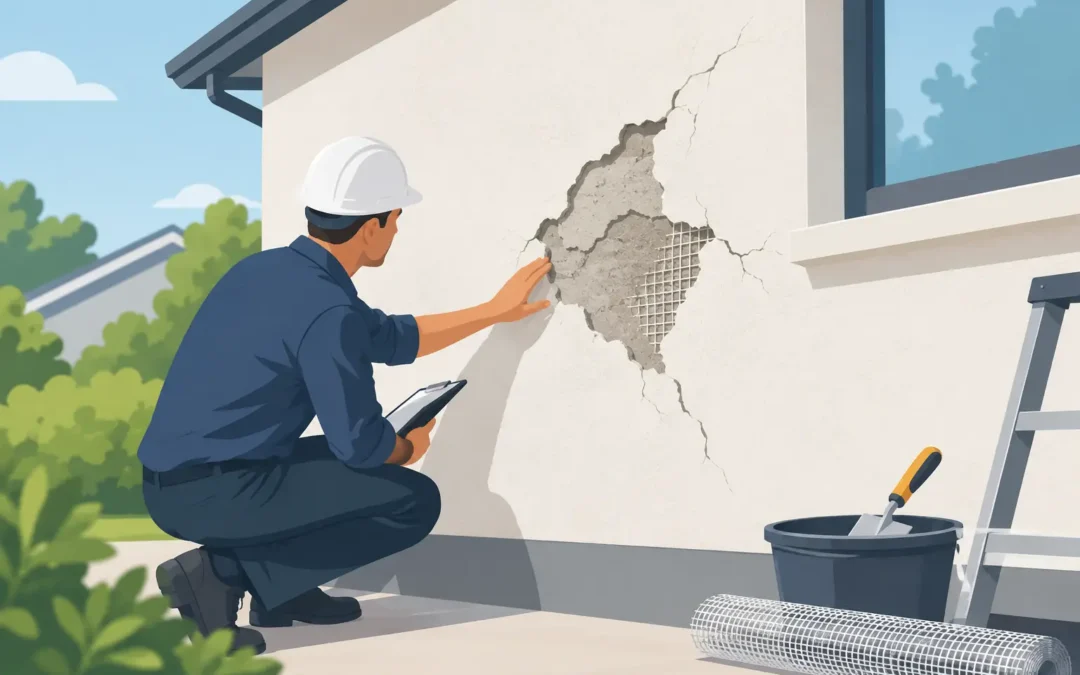
A crack in external render may look like a small cosmetic issue, but it can be the first route for rainwater to reach the wall beneath. Effective render repairs are about more than filling a visible gap. The cause of the damage, the condition of the surrounding finish and the type of render already on the property all matter.
For homeowners, landlords and commercial property owners, acting early usually means a smaller, cleaner repair. Leave loose or cracked render exposed through another wet North West winter, however, and a modest patch can become a wider refurbishment job.
What causes damaged render?
Render is the protective outer finish on a building, so it has to cope with driving rain, frost, summer heat and everyday movement in the structure. Even a well-applied finish will eventually need attention if the wall, drainage or previous workmanship has a problem.
Hairline cracking is often caused by normal movement, particularly around doors, windows, extensions and changes in wall materials. These fine cracks are not always serious, but they should be checked rather than simply painted over. If they are letting moisture in, or if they continue to widen, the repair needs to deal with movement as well as the surface finish.
Larger cracks can point to settlement, failed lintels, movement between an older house and a newer extension, or poor preparation behind the render. Hollow areas are another common concern. They occur when render loses its bond with the background wall and may sound empty when tapped. In time, these areas can crack, bulge or come away completely.
Water is frequently at the centre of more extensive damage. Leaking gutters, overflowing downpipes, defective roof details and poorly fitted window sills can repeatedly soak one section of wall. Repairing the render without putting the water source right only delays the same problem.
When a local render repair is the right answer
A targeted repair is often the sensible option where damage is isolated and the existing render is otherwise sound. For example, a small impact hole, a local crack around a window reveal or a blown patch beneath a repaired gutter may only require the affected area to be carefully removed and reinstated.
The key is achieving a proper bond and a finish that works with the rest of the elevation. Loose material must be taken back to a solid edge, the wall beneath prepared correctly, and suitable reinforcement used where necessary. The new render is then built up to match the surrounding depth and texture as closely as possible.
This is especially worthwhile on a relatively modern rendered property where the majority of the façade remains in good condition. It can restore weather protection without the cost and disruption of treating every wall.
There is a practical trade-off. A repair can blend very well, but an exact invisible match is not always possible, particularly on older painted render that has faded or become marked over time. A professional assessment should be honest about this before work starts. Sometimes repainting the full elevation after the repair gives the cleanest overall result.
Repairs to painted render
Traditional sand and cement render is commonly finished with masonry paint. If it is sound apart from a few local defects, damaged areas can be repaired and the wall repainted in a suitable breathable coating. Preparation is essential: flaking paint, algae and loose render need removing first.
Painting is not a cure for damp, active cracks or render that has detached from the wall. It should be the final finishing stage once the underlying defects have been addressed.
Repairs to coloured render
Coloured render systems, including monocouche and silicone-based finishes, can be more difficult to patch without a visible join. The original colour may have weathered, and different batches can vary slightly. Small repairs are still possible, but the best option depends on the location and extent of the damage.
On a prominent front elevation, it may be better to repair the base and apply a compatible finish across the whole section of wall. This produces a more consistent colour and texture than several separate patches.
Signs that re-rendering may be better
Local repairs stop making sense when defects appear across large areas of the property. Repeated cracking, widespread hollow spots, failed corners, stained damp patches and extensive flaking are all signs that the existing finish may be at the end of its useful life.
Re-rendering allows the old, unsound material to be removed and the wall to be properly assessed. It also gives an opportunity to correct details that may have caused ongoing failure, such as inadequate movement joints, poor beads around openings or unsuitable render applied over incompatible backgrounds.
There are four situations where a wider scheme is usually worth considering:
- The render is detached or drummy over several areas of the wall.
- Cracks keep returning after previous patch repairs.
- Water damage has affected the render in more than one location.
- The finish is dated, heavily stained or has been patched so often that it no longer presents well.
A full replacement costs more than a small repair, but it can offer better long-term value where the existing finish is fundamentally failing. It also gives property owners the chance to choose a modern coloured render or to add external wall insulation where heat loss is a concern.
Why the cause must be fixed first
The quality of render repairs depends heavily on diagnosis. A neat patch applied over a damp wall, a failed gutter or an unstable crack is unlikely to last. This is why the first visit should focus on what has happened to the wall, not just what the damage looks like from the ground.
A good inspection considers the render type, the wall construction, cracks around openings, roofline drainage, ground levels and any evidence of moisture inside the building. On older homes, hard cement render over softer brickwork can sometimes trap moisture and contribute to deterioration. The right solution may involve selecting a more appropriate, breathable finish rather than repeating an unsuitable one.
External wall insulation systems need particular care. Their render finish is part of a complete system, usually including insulation boards, basecoat, mesh reinforcement and a decorative topcoat. Damage should be repaired with compatible materials and methods to maintain weather resistance and avoid creating weak points.
What a well-finished repair should include
The visible finish matters, but so does the work beneath it. A dependable repair starts with protecting windows, paths and nearby areas, then removing only the material that is loose or compromised. The substrate must be cleaned and prepared so the new application has a reliable base.
Where cracking has occurred, reinforcement mesh may be incorporated into the basecoat to help spread movement and reduce the risk of the crack showing back through. Edges, corners and junctions should be finished neatly with the correct beads and trims. Finally, the repair needs enough time to cure before any compatible paint or decorative coating is applied.
Clean working practices are part of the job. Rendering can be messy, but careful masking, orderly site management and a thorough clean-down make a real difference to the experience of having work done at your property.
How to protect your render after repair
Once repairs are complete, a little maintenance helps preserve the finish. Keep gutters and downpipes clear, and make sure water is discharged away from the wall. Trim back climbing plants that hold moisture against the render, and deal with small chips or cracks before winter makes them worse.
Avoid pressure washing at close range or using harsh cleaning products, especially on modern thin-coat finishes. A gentle clean with appropriate products is usually safer. If staining or algae is becoming a regular issue, it is worth checking whether the wall is staying damp because of shade, leaking drainage or a detail at roof level.
For properties in Greater Manchester, Salford, Bolton or Bury, regular exposure to rain makes early attention particularly worthwhile. A specialist can advise whether the answer is a local patch, a re-coat or a more substantial re-render, without pushing work that the wall does not need.
At DecoRenders, the aim is to give clear advice based on the condition of the property and deliver a finish that looks right as well as protects the wall. If you can see cracking, loose render or damp staining, arrange an inspection before a small defect has time to spread.
Recent Comments