
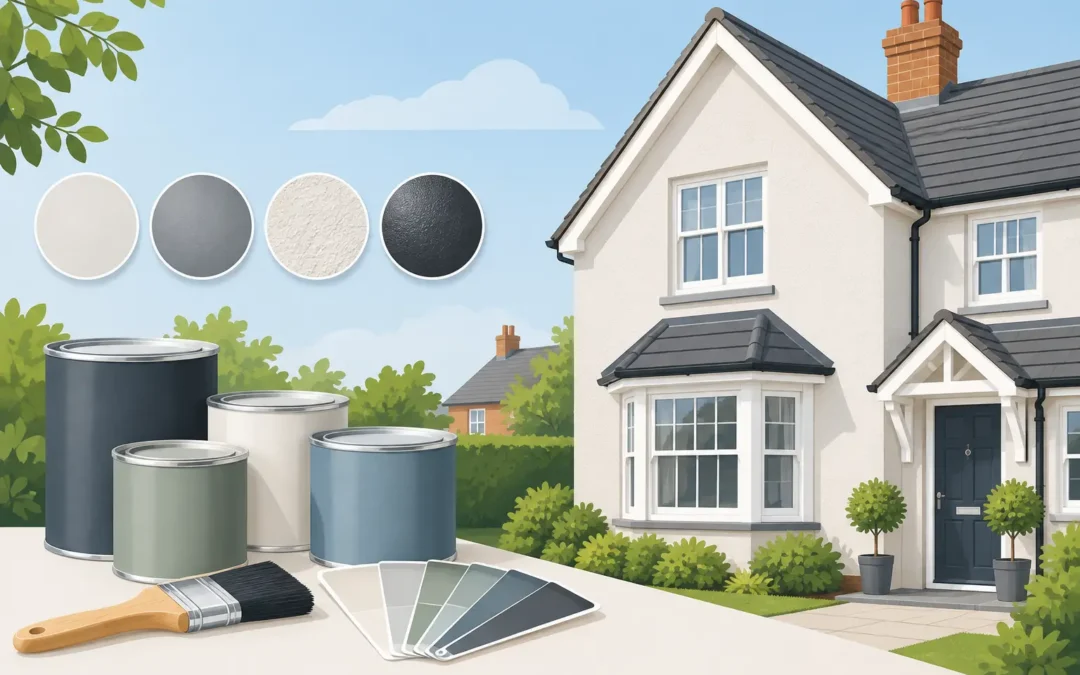
A freshly painted exterior can make a tired property look cared for again, but the best exterior paint finishes are not simply the shiniest or most expensive options on the shelf. The right choice depends on what you are painting, the condition of the surface and how much weather it faces. A finish that looks excellent on timber windows may be completely wrong for a rendered wall.
For homes and commercial properties across Greater Manchester, where rain, frost and damp conditions are regular challenges, appearance and protection need to work together. A good exterior finish should suit the building, shed water effectively and remain practical to maintain.
Start with the surface, not the colour chart
Before choosing a sheen level, identify the material underneath. Exterior masonry, render, brick, timber, metal and previously painted surfaces all need different treatment. Applying a quality paint to an unstable, damp or poorly prepared background will not solve the underlying problem.
Rendered walls need particular care. Hairline cracks, loose areas, algae growth and failed old coatings should be dealt with before painting begins. If the render is sound but weathered, a breathable masonry coating can give it a clean, uniform appearance. If it is cracked, hollow or allowing water into the wall, repairs or a new render system may be the better long-term investment.
New render also needs enough time to cure before it is painted, unless the chosen system is designed to be coated sooner. Rushing this stage can trap moisture and lead to peeling, blistering or patchy colour.
The best exterior paint finishes by area
Matt masonry paint for walls and render
Matt is usually the preferred finish for exterior walls, render and many masonry surfaces. It gives a clean, contemporary appearance and helps disguise minor surface unevenness that would be more obvious with a sheen. This is especially useful on older rendered properties, where a perfectly flat surface is rarely realistic.
A proper exterior masonry paint should be weather resistant, breathable and suitable for the substrate. Breathability matters because walls naturally hold and release some moisture. A coating that is too dense can trap moisture behind the paint film, causing it to fail prematurely.
Matt finishes do attract dirt slightly more readily than a higher-sheen surface, but on a house wall this is normally a sensible trade-off for a softer, more even look. Choose a reputable, exterior-grade product rather than an interior matt emulsion, which is not built for rain, temperature changes or ultraviolet exposure.
Satin or eggshell for timber and details
For fascias, soffits, exterior doors, window frames and timber cladding, satin or exterior eggshell often provides the best balance. These finishes have a gentle sheen that looks smart without highlighting every brush mark, knot or imperfection in the timber.
Satin is generally easier to wipe clean than matt and provides a more durable-looking finish on frequently handled areas such as front doors. It also sits well alongside matt-painted walls, creating a subtle contrast rather than making every detail glossy.
Timber preparation is just as important as finish choice. Scrape back loose paint, sand worn edges, fill suitable defects and use the correct exterior primer or undercoat where bare wood is exposed. If there is rot, soft timber or water getting into joints, painting over it will only delay the repair.
Gloss for selected features
Gloss remains a strong option for certain exterior features, particularly traditional front doors, metal railings, gates and period details. A full gloss finish offers the highest shine and can be hard-wearing when applied properly. It gives a classic look that suits some properties very well.
The downside is that gloss reflects light strongly, so it exposes uneven preparation, dents and brush marks. On large timber areas or tired surfaces, it can look less forgiving than satin. It may also show dirt, water spotting and fading more clearly over time.
For this reason, gloss works best when the surface is in good condition and the desired look is deliberately crisp and traditional. It is not usually the best choice for large exterior wall areas.
Semi-gloss for metalwork and busy areas
Semi-gloss sits between satin and full gloss. It is often a practical choice for metal railings, gates, handrails and painted masonry plinths where extra washability and durability are useful. It has enough sheen to resist grime more effectively than matt, without the mirror-like reflection of gloss.
Metalwork needs thorough preparation first. Rust must be removed or stabilised, bare metal should receive an appropriate metal primer, and any source of persistent moisture should be addressed. A beautifully applied topcoat cannot compensate for corrosion underneath.
Paint finish and paint type are not the same thing
A common mistake is to focus only on whether a paint is matt, satin or gloss. The paint’s formulation is equally important. Exterior masonry coatings may be acrylic-based, mineral-based or silicone-enhanced, and each has different qualities around breathability, water repellence and flexibility.
For rendered walls, particularly older or solid-wall properties, the coating should work with the existing render rather than seal it in. A specialist assessment is worthwhile if you are dealing with repeated damp patches, flaking paint or cracks. These signs can point to defects in render, gutters, flashings or ground levels rather than a simple decorating issue.
It is also worth considering whether paint is the right finish at all. Coloured render systems, including monocouche and silicone render, provide their colour through the render finish itself. They can be an excellent option when a property needs more than a cosmetic repaint, offering a modern, low-maintenance façade when installed correctly.
Choosing colour without creating extra maintenance
Light and mid-tone colours are often the most forgiving on exterior walls. They show less fading, dust and rain marking than very dark shades, while still giving a property a noticeable refresh. Cream, soft grey, warm white and muted stone tones remain popular because they suit many styles of brickwork, roofs and windows.
Deep colours can look striking, particularly on feature areas, doors and modern extensions. However, dark paint absorbs more heat in direct sunlight and can make imperfections, fading and streaks more noticeable. On south-facing walls, this is worth discussing before committing to a bold colour.
Always view test patches outside at different times of day. A colour that appears warm indoors can look cold in shaded daylight, while a pale grey may show a blue or green undertone against existing brickwork.
Preparation decides how long the finish lasts
Even the best exterior paint finish will struggle if the surface has not been properly prepared. Walls should be cleaned of dirt, algae and loose material, then allowed to dry fully. Cracks need to be repaired using suitable exterior materials, and powdery or porous surfaces may require a stabilising solution or primer.
Painting should be planned around the weather. Avoid applying paint during rain, frost, strong winds or very hot direct sun. The surface may feel dry, but moisture within the wall or a sudden shower can affect adhesion and curing. In the North West, allowing sensible flexibility in the work schedule is part of getting a durable result.
Two properly applied coats are normally better than one heavy coat. They give more even coverage, a stronger film and a better-looking finish. Careful masking, neat cutting-in and protection of paths, windows and planting also make a clear difference to the finished job.
When repainting is no longer enough
If paint keeps peeling in the same areas, cracks are spreading, or the render sounds hollow when tapped, it is time to look beyond decoration. Water can get behind damaged render and cause bigger problems if it is ignored. Repairing the substrate first protects the property and avoids paying to repaint a surface that will fail again.
For homeowners who want practical advice before committing to exterior work, DecoRenders can assess whether a repaint, render repair or a full replacement finish makes the most sense. The aim should be a finish that looks right on day one and continues to protect the building through the seasons.
A well-chosen finish is not about following a trend. It is about giving your property the level of protection, appearance and maintenance commitment that genuinely suits it.
Recent Comments