
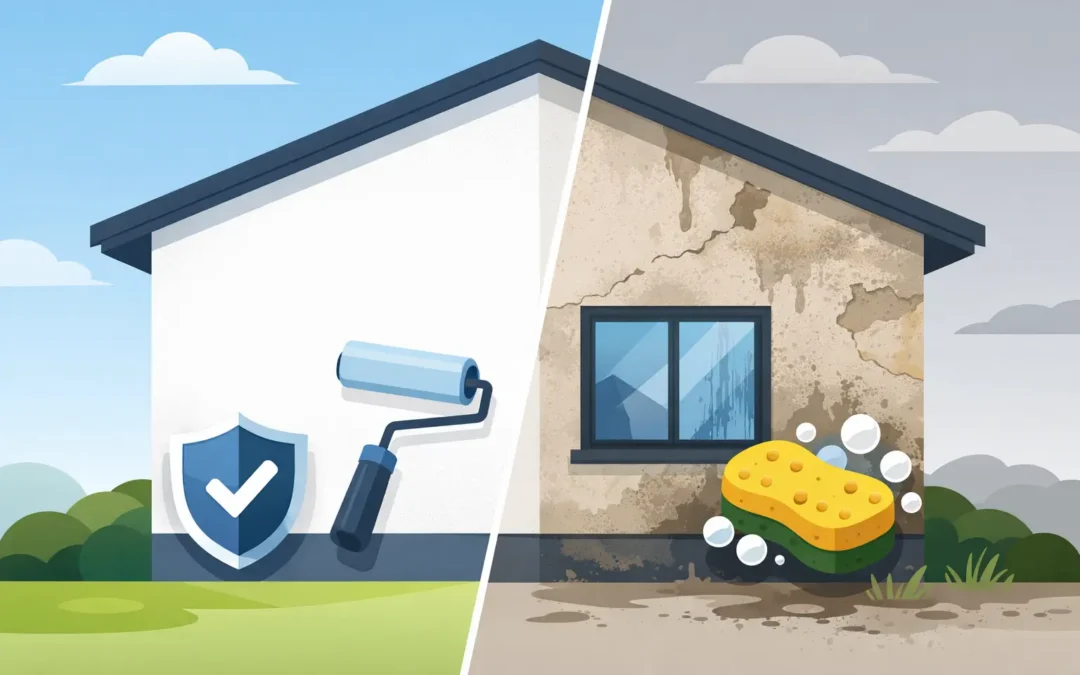
A freshly rendered home can transform the whole street-facing appearance of a property, but looks are only part of the decision. Are rendered walls low maintenance? In most cases, yes – particularly when a modern coloured render system is properly specified and applied. They are not completely maintenance-free, however. The finish, the condition of the existing walls and the quality of installation all affect how much attention the exterior will need over the years.
For homeowners, landlords and commercial property owners, the sensible aim is not a wall that never needs looking after. It is a finish that stays smart, protects the building and avoids the regular repainting, patching and water damage associated with tired external surfaces.
Are rendered walls low maintenance in practice?
Modern render is generally a lower-maintenance choice than traditional painted sand and cement render. A good coloured render finish has colour through the material, rather than relying on a painted top coat. This means there is no routine cycle of repainting simply to restore the original colour.
Monocouche and silicone-based systems are popular for this reason. They can provide a clean, even appearance while allowing the wall to manage moisture appropriately. Silicone render also has water-repellent properties, which can reduce the amount of rainwater absorbed at the surface. Less absorbed water often means less staining, fewer problems with frost damage and a lower chance of algae taking hold.
That said, low maintenance does not mean fit it and forget it. Exterior walls are exposed to rain, traffic grime, wind-blown dirt, plant growth and the usual weather changes we see across Greater Manchester, Salford, Bolton and Bury. A shaded north-facing elevation beside trees will need more occasional attention than a sunny, open wall, whatever material is used.
The finish you choose makes a difference
Not every rendered wall performs in the same way. Traditional sand and cement render can be a sound option in the right setting, but it is more prone to shrinkage cracking and may need painting over time. Once painted, future maintenance is tied to the performance of that paint coating.
Coloured render systems are often a better choice where a long-lasting decorative finish is the priority. Monocouche render is applied as a through-coloured finish and can give a crisp, uniform result. Silicone render is especially useful on properties exposed to regular rain or where insulation render is being installed, because it combines flexibility with a more water-repellent surface.
Texture matters too. A very rough finish can hold onto more dirt than a finer, flatter texture. This does not make textured render a poor choice – it can suit many homes and commercial premises well – but it is worth discussing the practical implications before work starts. The right finish should match the property, its exposure and the appearance you want to maintain.
What maintenance does a rendered wall actually need?
Most well-finished rendered walls only need periodic visual checks and gentle cleaning. Once or twice a year, look over the elevations for staining, cracks around openings, damaged sealant or any areas where gutters and downpipes may be overflowing onto the wall. Spotting small issues early is far easier and less costly than waiting for water to find its way behind a finish.
Light surface dirt can often be removed with clean water and a soft brush. For algae or green staining, use a cleaner suitable for the specific render system and follow the product guidance carefully. Avoid harsh acids, abrasive pads and aggressive pressure washing. These can damage the surface, drive water into weak points or leave a patchy finish that is harder to put right.
It also pays to keep the building around the render in good order. Clear gutters, sound roof edges, correctly fitted flashings and functioning downpipes all help to prevent concentrated water running down the wall. Keep climbing plants under control and avoid piling soil, gravel or paving too high against the base of the building. Render is durable, but it should not be asked to deal with problems caused elsewhere.
Cracks are not always a render failure
A hairline crack does not automatically mean the whole wall needs replacing. Buildings move slightly with temperature changes, settlement and everyday use. Small cracks can occur around windows, doors and junctions, particularly if the original background has movement or weaknesses.
What matters is the cause and whether the crack is allowing water behind the render. A good assessment looks beyond the visible line. The substrate, any existing damp issues, movement joints, sealant details and the type of render all need consideration before repairs are made.
Larger, spreading or recurring cracks should be checked promptly. Simply filling over them without dealing with movement in the background can lead to the same problem returning. The best repair is one that restores the finish while addressing why it cracked in the first place.
Installation is where maintenance is won or lost
Even the best render product will struggle if it is applied to an unsuitable surface or finished without proper detailing. This is one reason rendering should be treated as a system, not just a coat applied to a wall.
Before rendering, the background needs to be stable, clean and properly prepared. Existing loose render, failed paint, cracks and moisture issues must be dealt with. Beads, mesh reinforcement, movement joints and seals around windows may seem like small details, but they have a major effect on how the completed wall handles weather and movement.
Insulation render systems need particular care. External wall insulation can improve comfort and help reduce heat loss, but the boards, fixings, basecoat, reinforcement mesh and top coat must work together. Correct detailing around sills, rooflines, doors and services is essential to prevent water ingress and maintain a neat finish.
This is also why the cheapest quote is not always the lowest-cost option over time. A poorly prepared or rushed job may look acceptable on day one but develop cracking, staining or detachment much sooner. Skilled workmanship gives a rendered exterior its best chance of staying low maintenance for many years.
When rendered walls may need more attention
There are situations where even a high-quality render will require more regular care. Properties close to busy roads can collect soot and airborne dirt. Homes under heavy tree cover may develop algae more quickly. Coastal locations face salt exposure, while older buildings can have underlying damp, movement or masonry issues that must be resolved before any new finish is applied.
Dark colours can also show dust, water marks or fading differently from lighter shades, especially on exposed elevations. This should not put you off choosing a darker colour, but it is worth making the decision with realistic expectations about the setting.
Repairs after accidental impact are another consideration. Render can be chipped by gates, garden equipment, wheelie bins or building work. Small local repairs are often possible, although an exact colour and texture match can be difficult on an older, weathered wall. Keeping any spare material and a record of the system used can be helpful if repairs are needed later.
How to keep a rendered property looking smart
The simplest maintenance plan is usually the most effective: inspect the walls seasonally, keep rainwater goods clear, wash off light dirt before it builds up and deal with damage early. Do not attach fixtures, lights, signs or climbing supports through the render without using appropriate fixings and sealing the penetrations correctly.
If you are considering new render, ask how the proposed system suits your property rather than choosing on colour alone. The age and construction of the building, the existing wall condition, exposure to weather and whether insulation is being added should all shape the recommendation. A clear explanation at the start can prevent avoidable maintenance later.
A well-specified, professionally applied render finish should give your property a clean, protected exterior without demanding constant work. The best result comes from choosing the right system, respecting the details around it and giving the wall the occasional care any exposed part of a building deserves.
Recent Comments