
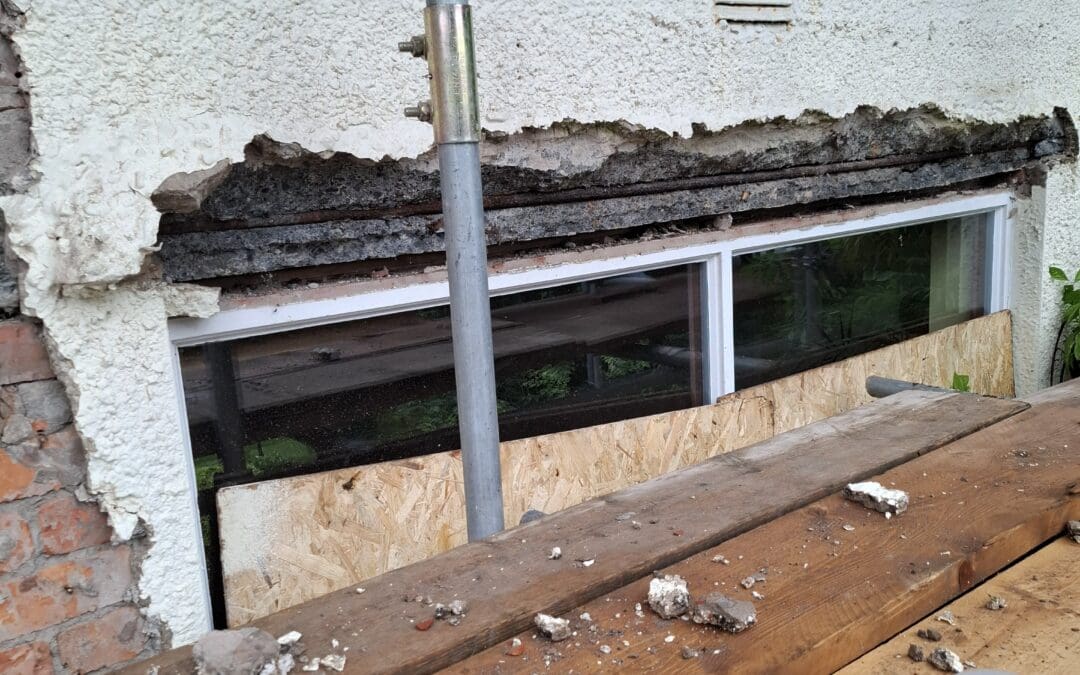
Pebbledash can make an otherwise solid property look tired, dark and difficult to maintain. But this is not a job where simply knocking off the stones guarantees a better wall underneath. This pebbledash removal guide explains what is involved, when removal is worthwhile and why a professionally prepared over-render can often be the safer, longer-lasting choice.
Start with the wall, not the finish
Pebbledash was widely used because it is hard-wearing, weather-resistant and practical for exposed elevations. Across Greater Manchester, Salford, Bolton and Bury, it is common on properties that have spent decades dealing with driving rain, frost and changing temperatures.
The problem is usually appearance rather than the material alone. Loose stones, patch repairs in different colours, staining and dated paint can leave a façade looking neglected. Before choosing a solution, the existing wall needs a proper inspection. A sound, well-bonded pebbledash coating is very different from one that is hollow, cracked or pulling away from the brickwork.
The key question is not simply, “Can it be removed?” It is, “What condition will the wall be in after it has been removed?” On older homes, pebbledash may be covering uneven brickwork, failed earlier repairs or a mixture of materials that will need further treatment before a new finish can be applied.
Is pebbledash removal the right option?
Full removal can be a good choice where the coating is badly detached, moisture has got behind it or the property needs localised repairs back to the original masonry. It can also suit owners who are determined to expose original brickwork, provided that the bricks and mortar are in a condition worth preserving.
However, removal is noisy, dusty and labour-intensive. It can damage soft bricks or weak mortar joints if handled aggressively, and it may reveal a wall that needs extensive repair. What begins as a cosmetic update can become a larger restoration project.
For many properties, applying a new render system over stable pebbledash is the more sensible route. The existing finish is repaired and securely prepared, then a suitable base coat and reinforcing mesh are used before the chosen render finish is applied. This avoids unnecessary damage to the substrate while delivering the clean, modern appearance most owners are looking for.
Neither route is automatically best. The right approach depends on adhesion, cracks, damp issues, previous coatings and the intended finish. Honest advice at this stage can save considerable cost and disruption later.
What a professional pebbledash removal process involves
Where removal is appropriate, the work should be planned around the wall’s condition rather than rushed from one elevation to the next. Access arrangements, protection for windows and landscaping, and safe waste removal all matter as much as the stripping itself.
Testing and preparation
A specialist will first assess whether the existing render is firmly bonded and identify areas that are already loose or hollow. The age of the property and any previous renovation work should also be considered. Pebbledash itself is not normally an asbestos-containing material, but older coatings, textured finishes or associated building materials can require testing before disturbance. If there is any doubt, sampling should be arranged before work starts.
Windows, doors, paths, drains and neighbouring areas need careful protection. Removing pebbledash creates a significant amount of rubble and dust, so clean site management is not an optional extra. It is part of doing the job properly.
Controlled removal
The stones and backing coat are removed in manageable sections using appropriate hand tools and mechanical equipment. The aim is to take off failed material without needlessly damaging the masonry beneath. This is skilled work: too little force leaves unstable material behind, while too much can scar brick faces and open mortar joints.
Walls are then cleared of remaining loose debris. Any hidden defects are assessed before the next stage begins. This is often where the real condition of the property becomes clear.
Repairing the exposed wall
Once the pebbledash is off, repairs may include repointing, replacing damaged bricks, filling voids and treating cracks. If damp has been caused by overflowing gutters, defective flashings or ground levels bridging the damp-proof course, those causes must be dealt with first. New render applied over an unresolved moisture problem will not be a lasting repair.
The wall must be sound, clean and suitably dry before it receives a new finish. Depending on the substrate, this may involve a bonding coat, render carrier system or other preparation chosen for compatibility with the building.
When over-rendering makes more sense
A well-executed over-render is not a shortcut. It is a designed system that depends on preparation, reinforcement and compatible materials. Where pebbledash is stable, this approach can be less disruptive than full removal and avoids exposing brickwork that was never intended to be left visible.
Loose areas are removed, cracks are repaired and the surface is levelled where required. Reinforcing mesh is embedded into the base coat, particularly around openings and stress points, to help control future cracking. A modern coloured render, such as monocouche or a silicone-based finish, can then provide a smoother, more contemporary exterior.
Coloured render is popular because it reduces the need for regular repainting and gives a consistent finish across the façade. That said, it still needs sensible maintenance. Gutters should be kept clear, plants should not be allowed to grow against the wall and any impact damage should be repaired promptly.
If thermal performance is also a concern, external wall insulation with a render finish may be worth considering. This is a bigger project and not every property is suitable, but it can improve comfort as well as appearance. Details around window reveals, roof edges and external fixtures need careful planning, which is why the system should be specified rather than improvised.
Common mistakes to avoid
The biggest mistake is treating pebbledash as a purely decorative layer. It may be concealing movement, damp or masonry defects, and covering it with paint or a thin cosmetic coating can make future repairs harder.
Avoid removing large areas before checking what lies behind them. A small test area can reveal whether the original brickwork is suitable for exposure and how much repair is likely to be needed. It is also unwise to apply new render directly onto dirty, painted or unstable pebbledash without the right preparation.
Cheap quotes can be misleading where they do not allow for protection, waste disposal, repairs, reinforcement or proper curing time. Exterior render work is highly visible, and the details around corners, window edges, pipes and sills are where poor workmanship tends to show first.
Finally, do not ignore the weather. Render products have temperature and moisture limits, and rain, frost or rapid drying can affect the finish. A reliable contractor will plan around conditions rather than press on simply to meet an unrealistic deadline.
Choosing the finish after removal
If the brickwork is in excellent condition and suits the character of the property, careful cleaning and repointing may be enough. This is not always the lowest-cost option, however, especially where many bricks need replacing or previous damage is extensive.
For most owners wanting a smart, uniform façade, a modern render finish is the practical choice. Smooth render can create a crisp contemporary look, while a lightly textured finish may be more forgiving on older walls. Colour should be chosen with the property’s roof, windows and surrounding homes in mind. Pale shades can brighten an elevation, but darker finishes may show dust or marks more readily in busy urban areas.
Good detailing protects the result. Proper drip beads, neatly finished reveals and careful junctions with sills, pipes and roof lines all help prevent water tracking behind the new surface. These details are easy to overlook in a quotation but make a real difference to the finish and its lifespan.
Get clear advice before work begins
A proper survey should give you a clear explanation of the recommended method, the likely condition of the wall beneath and any repairs that may be needed. Ask whether full removal is genuinely necessary, how cracks and weak areas will be treated, and what finish is proposed once preparation is complete.
At DecoRenders, the focus is on recommending the route that gives the property a sound, clean finish rather than pushing a one-size-fits-all solution. Whether that means careful removal, repair and re-rendering, or a fully prepared over-render system, the quality of the groundwork will decide how good the exterior looks for years to come.
The best result is not simply a wall without pebbledash. It is an exterior that suits the property, keeps the weather out and still looks properly finished when you walk up to it every day.
Recent Comments