
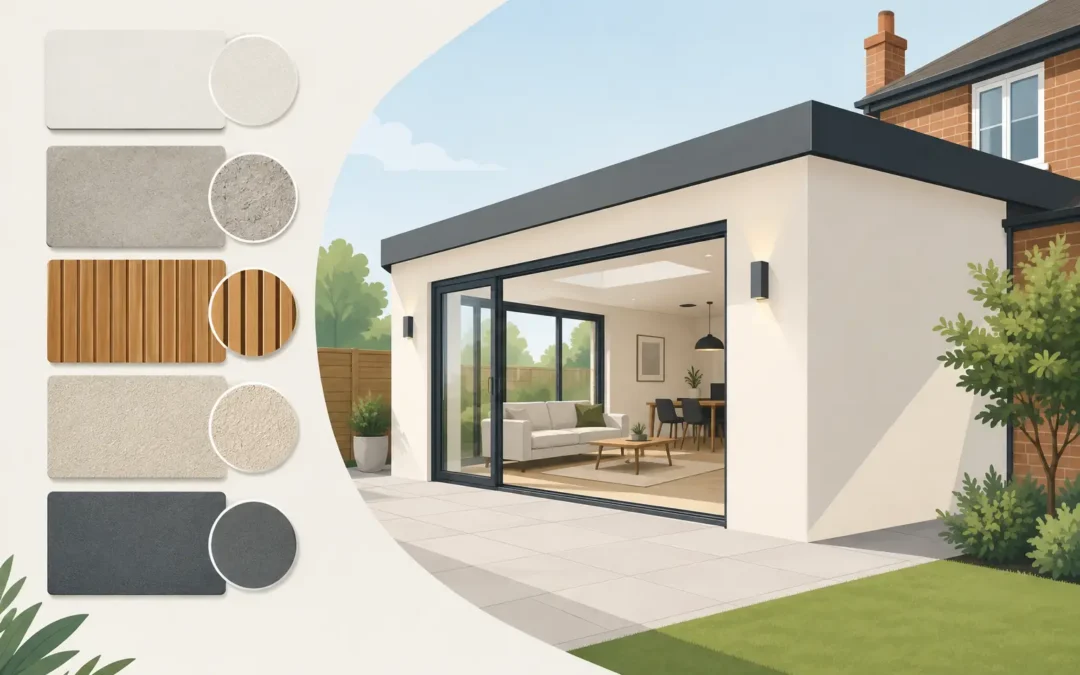
An extension can be beautifully designed, well insulated and full of natural light, yet still look like an afterthought if its exterior finish does not sit comfortably with the original property. Choosing the best wall finishes for extensions is about more than picking a colour or texture. The right choice needs to manage rain, movement, insulation details and the character of the house.
For homes across Greater Manchester, Salford, Bolton and Bury, weather resistance matters just as much as kerb appeal. Frequent rain, frosty spells and shaded elevations can expose poor preparation quickly. A finish that is properly specified and applied will protect the new build while giving the whole property a more considered, long-lasting appearance.
Start with the existing property
The most successful extensions do not always copy the original house exactly. Sometimes a clean contrast works better. What matters is that the materials look deliberate, with sensible junctions around windows, doors, rooflines and the point where old meets new.
A traditional red-brick semi may suit a matching brick extension, but it can also look excellent with a carefully selected coloured render or a small feature area of timber-effect cladding. A rendered 1930s property may benefit from continuing the same style across the extension, provided the existing render is sound and the finish can be matched closely enough.
Before selecting a wall finish, consider the age and condition of the existing walls, the type of extension being built, its orientation and how much maintenance you are willing to take on. Planning conditions can also influence the options, particularly in conservation areas or where an extension is expected to use materials that complement the main house.
Coloured render: a clean, modern choice
Coloured render is one of the most popular exterior finishes for extensions because it provides a smart, consistent surface without the need for regular repainting. It is particularly effective on rear and side extensions, where homeowners often want a modern look that improves a tired elevation as well as the new structure.
Silicone render systems are highly water-repellent while remaining breathable. Water tends to bead and run off the surface, helping it stay cleaner than traditional painted sand and cement render. This is useful on exposed walls and in the damp North West climate, where ordinary painted finishes can become stained or patchy over time.
Monocouche render is another through-coloured option. It is usually applied in a thicker coat and scraped back to create a uniform, attractive finish. It can be a practical choice for larger extension walls, especially where a crisp, contemporary appearance is wanted at a sensible cost.
The quality of the preparation is vital. Render should be applied to a suitable background or approved render board system, with correct beads, mesh reinforcement and movement joints where required. Applying a finish straight over an unsuitable surface may look acceptable at first, but cracks and weak areas can soon appear.
When render works best
Render is well suited to extensions with clean, simple shapes and large wall areas. It can soften the look of a boxy addition and works particularly well alongside anthracite window frames, roof lanterns and modern doors. Neutral shades such as off-white, warm grey and soft beige are often easier to live with than stark bright white, which can show dirt more readily.
A rendered extension does not have to look plain. Different grain sizes, recessed window details and a contrasting plinth can add definition without making the design overly busy.
Brick and brick slips: the traditional option
Using matching brick remains the safest route when extending a brick-built house. It creates continuity and can be the preferred option where planning guidance calls for materials that reflect the original building. However, finding an exact match is not always straightforward. Older bricks may have faded, weathered or been made in a style that is no longer available.
A good match should consider more than colour. Brick size, texture, mortar shade and joint profile all influence the final appearance. A near match can look more convincing than a supposedly exact brick laid with the wrong mortar or pointed too neatly against weathered original brickwork.
Brick slips offer another option. These are thin sections of real brick fixed to a suitable backing system, giving the appearance of a full brick wall without the depth and weight of conventional brickwork. They can be useful around feature elevations, garden rooms or areas where construction details make full brick less practical.
Brick slips need accurate setting out and careful detailing around corners, reveals and damp-proofing. Done properly, they can produce an excellent finish. Done poorly, the patterning and cut edges can be obvious, so this is not an area to cut corners.
Cladding for contrast and character
Cladding is often used as an accent rather than across every wall. A timber-effect panel around a rear extension, a vertical section beside bi-fold doors, or a darker composite finish at first-floor level can break up a large rendered or brick elevation.
Composite cladding is generally lower maintenance than natural timber and offers a consistent colour and profile. Natural timber has warmth that manufactured boards cannot fully replicate, but it needs proper treatment, ventilation and ongoing care. Without this, timber can fade, move or deteriorate in wet conditions.
Metal cladding can suit a contemporary architectural extension, but it is less common on conventional family homes. Its appearance needs to relate to the rest of the building, otherwise the extension can feel disconnected rather than distinctive.
As with any external wall finish, details matter. Cladding needs correct battens, ventilation gaps, flashings and trims so moisture does not become trapped behind it.
Painted render: affordable, but more upkeep
A traditional rendered wall finished with masonry paint can be an economical choice, especially for a smaller extension or where neighbouring walls will also be redecorated. It offers a broad range of colours and makes future colour changes easier.
The trade-off is maintenance. Painted surfaces usually need refreshing over time, and cracks or flaking paint must be dealt with promptly to stop water getting behind the coating. The result also depends heavily on the underlying render being sound, even and properly cured.
For homeowners who want a low-maintenance finish, a quality through-coloured render system is often a better long-term investment. For those who enjoy changing colours or are working to a tighter initial budget, painted render can still be the right answer.
Insulated render systems for comfort as well as appearance
If an extension involves upgrading existing external walls, an external wall insulation and render system can improve both comfort and appearance. Insulation boards are fixed to the outside of the wall, then reinforced and finished with a decorative render coat.
This can be particularly worthwhile where an older part of the property feels cold, or where you want to create one continuous rendered elevation that blends old and new. It must be designed carefully around roof eaves, window reveals, drainage pipes and ground levels. Adding insulation changes wall thickness, so the details cannot be treated as an afterthought.
Building Regulations, ventilation and moisture management all need proper consideration. An experienced installer will assess the wall construction before recommending a system rather than assuming insulation is suitable for every property.
Choosing the right finish for your extension
There is no single answer for every home. Matching brick may be best for a period property or a street where consistency matters. Coloured render is often the strongest choice for a clean, modern extension with minimal maintenance. Brick slips and cladding can add character when used selectively, while painted render provides flexibility at a lower upfront cost.
The decision should also account for exposure. A sheltered rear wall has different demands from a wind-driven, rain-facing side elevation. Dark finishes can look striking, but they may show dust, marks and salt deposits more readily than mid-tones. Very pale render can brighten a small garden, though it may need occasional cleaning where trees, traffic or shaded conditions encourage surface staining.
Do not overlook the finishing details
Even the best material can disappoint if the details are rushed. Straight edges, clean beads, level reveals and well-positioned movement joints all affect the final look. Downpipes, external lights, vents and meter boxes should be planned early, rather than added after the finished wall has been completed.
It is also worth thinking about how the extension connects to patios, paths and garden levels. Render must be kept clear of the ground where required, with suitable protection at low level. Poor ground clearance is a common cause of staining and moisture-related problems.
A wall finish should make your extension feel like a proper part of the home, not simply cover the blockwork. Take the time to compare samples in natural light, ask how the system will be prepared, and choose a finish that suits both the building and the way you want to maintain it. That care at the start is what produces an exterior that still looks right years after the builders have left.
Recent Comments